
How BaZi Differs from Western Astrology: A Clear Comparison
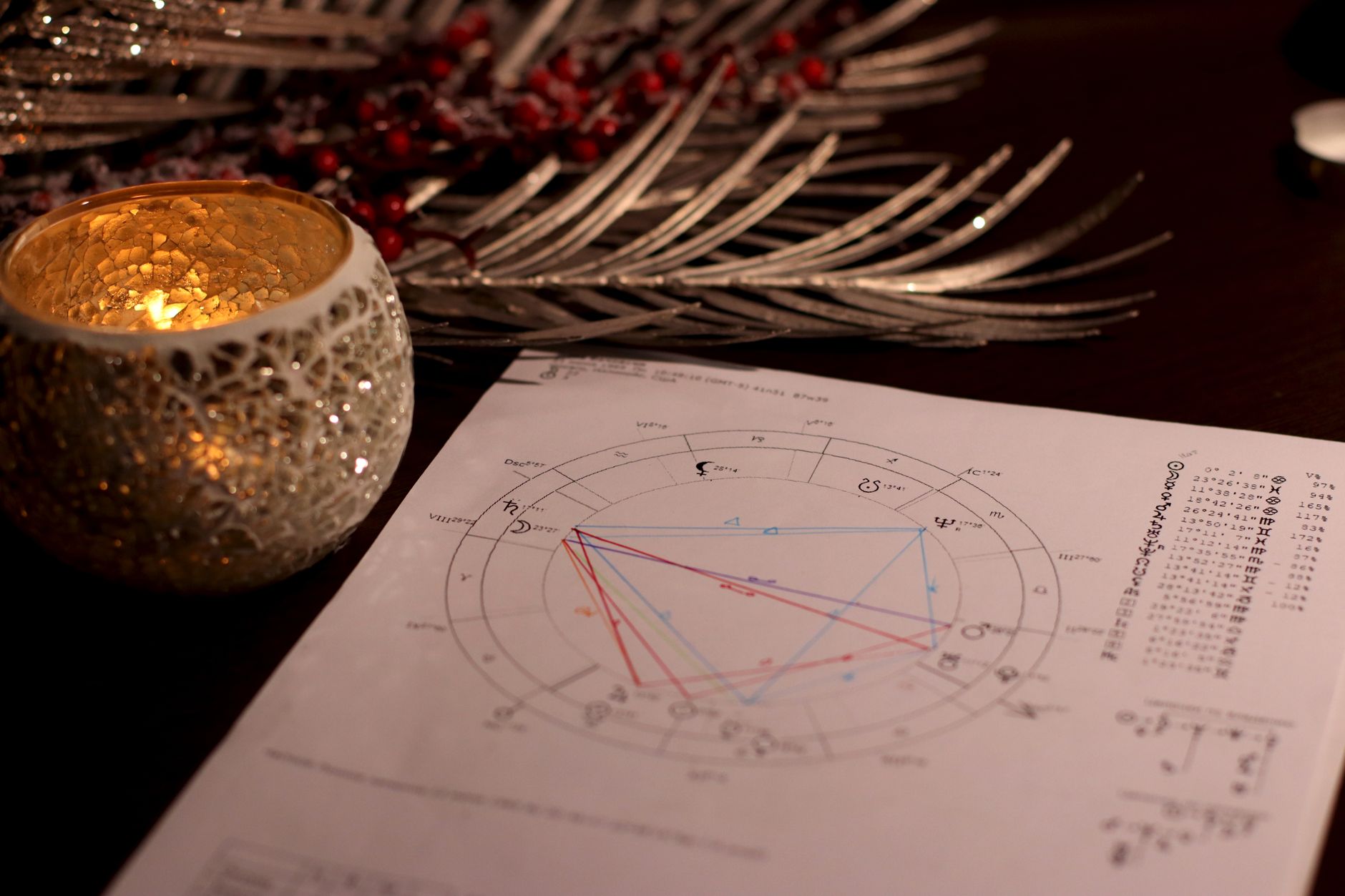
BaZi differs from Western astrology in its core building blocks, its calendar logic, and the kind of questions it is designed to answer: BaZi (the Four Pillars of Destiny) reads your birth moment as a balance of five elements — Wood, Fire, Earth, Metal and Water — arranged in four pillars of heavenly stems and earthly branches, while Western astrology reads the positions of planets in zodiac signs and houses as symbolic archetypes of personality and life themes. BaZi turns its year at Li Chun, the Start of Spring solar term around February 4; the Western zodiac year begins at the vernal equinox around March 20–21. BaZi leans toward elemental balance, useful elements and ten-year luck cycles; Western astrology leans toward planetary archetypes, aspects, transits and progressions. Neither system has been scientifically verified as predictive, and both are best understood as symbolic frameworks for reflection rather than sources of guaranteed outcomes. Below is a full comparison of both systems in their complete forms — not BaZi versus a Sun Sign alone — along with practical guidance on which to use, and when, for self-understanding.
| Aspect | BaZi (Four Pillars of Destiny) | Western Astrology |
|---|---|---|
| Core units | Four pillars: year, month, day, hour — eight characters from heavenly stems and earthly branches | Ten celestial bodies in twelve zodiac signs and twelve houses |
| Central logic | Balance of five elements (Wood, Fire, Earth, Metal, Water), yin and yang polarity | Planetary archetypes, sign expression, house placement, geometric aspects |
| Calendar anchor | Solar terms; the year begins at Li Chun (~February 4) | The zodiac year begins at the vernal equinox (~March 20–21) |
| Timing system | Fixed ten-year luck pillars derived from the birth chart | Transits and progressions tracking real or symbolic planetary movement |
| Reading style | Element strength, useful elements, seasonal context | Narrative, psychological and archetypal interpretation |
| Birth time role | Directly determines the hour pillar among the eight characters | Determines the ascendant and house cusps of the chart |
What Is BaZi? Understanding the Four Pillars of Destiny
BaZi, often translated as the Four Pillars of Destiny, is a Chinese metaphysical system that maps a person's birth moment into eight characters. Those eight characters come from four pillars: year, month, day and hour. Each pillar contains two characters, a heavenly stem stacked above an earthly branch, and together they form what practitioners regard as a snapshot of the energies present at the instant of birth.
The system has deep roots in Chinese metaphysical tradition and was historically used across Chinese communities for naming children, selecting dates for important occasions, and reflecting on a person's inherent make-up. In Hong Kong and other Chinese cultural centres, it remains part of everyday life. Parents may consult masters before settling on a newborn's name. Business owners sometimes ask about timing before a launch. It is not a fringe practice there; it sits comfortably alongside property prices and typhoon season as a fixture of local culture, regardless of what one believes about its claims.
The mechanics matter. The source describes the BaZi year as beginning at Li Chun, the Start of Spring solar term, typically around February 4, rather than at Lunar New Year. For a birth near a boundary, ask a practitioner to identify the calendar convention being used instead of assuming a holiday determines the chart. The source also describes the Day Pillar as repeating on a sixty-day cycle. These are descriptions of a traditional framework, not evidence of predictive accuracy.
The hour pillar is the precision instrument. It divides each day into twelve two-hour segments and is the reason a serious BaZi reading demands an accurate birth time. Two people born close together on a segment boundary can, in principle, carry different hour pillars and therefore different charts. This granularity is one of the clearest points of divergence when we set BaZi beside Western astrology.
It is worth stating plainly: these are the structures and beliefs of the tradition itself. Describing them faithfully is not the same as endorsing their predictive power. To see how your own four pillars would be assembled, a structured BaZi reading is the natural starting point.
Western Astrology Basics: Planets, Signs and Houses
Western astrology traces its roots to ancient Mesopotamia and Greece, roughly 2,500 years ago. Over that long history it developed a vocabulary most of us half-know even if we have never opened an ephemeris: Sun Signs, Mercury retrograde, rising signs, Saturn returns.
At its core, a Western natal chart is a map of the sky at your birth moment. As one recent explainer notes, these charts revolve around ten celestial bodies arranged in twelve houses. Each planet represents a function or drive; each sign colours that drive with a particular style; each house locates it in a domain of life. Venus in Scorpio is read differently from Venus in Gemini. Mars in the tenth house of career is read differently from Mars in the fourth house of home.
The chart is anchored to the zodiac year, which begins at the vernal equinox, around March 20–21, when the Sun enters Aries. This is a genuinely different calendar logic from BaZi's solar-term system. Western astrology also leans heavily on geometry. Aspects — the angles between planets, such as conjunctions, squares and trines — describe how the various drives in a chart are interpreted as cooperating or clashing. A chart with many harmonious aspects is traditionally read as flowing; a chart with many hard aspects is read as tense and dynamic.
When people attempt a birth chart comparison between the two systems, they often start here and hit confusion. There is no direct equivalent of a "house" in BaZi, and no direct equivalent of a "planet". Trying to translate Venus into a BaZi concept is like translating dim sum into a tasting menu. The frameworks were built for different questions, and a fair comparison has to respect that.
How BaZi Differs from Western Astrology in Core Approach
Here is the heart of the matter. How BaZi differs from Western astrology is less about star charts and more about what each system believes it is measuring.
Western astrology emphasises planetary positions and archetypes. Its strength, as commonly practised, is psychological and narrative. It offers a symbolic language for character, drive, relational patterns and life themes. Venus stands for love and attraction. Saturn stands for limitation and discipline. The zodiac signs are archetypes — stylised personalities that a planet temporarily wears. A Western reading often sounds like a guided tour of the psyche.
BaZi works with five elements: Wood, Fire, Earth, Metal and Water. Your eight characters each carry an elemental identity, some with yin polarity, some with yang. The reading is not primarily about archetype but about balance. A practitioner examines which elements are strong in your chart, which are weak, which are absent, and how those elements interact. Water nourishes Wood. Fire melts Metal. These relationships form a dynamic system, and your chart is read as a particular equilibrium — or a particular struggle — among them.
This changes the texture of a reading entirely. A Western astrologer might describe your chart as carrying a strong Saturnian theme of discipline through hardship. A BaZi practitioner might describe your chart as weak Metal with excessive Wood, and therefore benefiting from Earth to ground the Wood and support the Metal. The first is a story. The second is closer to an engineering problem: identify the imbalance, propose the corrective. Both are symbolic interpretations, and neither describes a measurable mechanism.
Another core difference is specificity of input. The Day Pillar in BaZi repeats only every 60 days, making it considerably more specific than a Sun Sign, which recycles monthly and is shared by enormous numbers of people worldwide. BaZi's day-plus-hour combination narrows the pool of identical charts dramatically, and the full eight-character chart narrows it further still. It is only fair to note that Western astrology offers comparable precision once you move beyond the horoscope column to the full natal chart, with its houses, aspects and ascendant. Comparing full BaZi to a lone Sun Sign flatters BaZi unfairly; the honest comparison is full system to full system.
Finally, the two systems start their years differently, and this is not trivia. BaZi's year turns at Li Chun around February 4. The Western zodiac year begins at the vernal equinox around March 20–21. If you were born in February or March, your placement within each system genuinely diverges. Someone born on February 20 sits near the Pisces cusp in Western terms but is assigned a specific BaZi year and month pillar determined by the solar terms. A careless comparison at this boundary produces nonsense, which is why a proper birth chart comparison must respect each system's own calendar before anything else.
If you want a side-by-side treatment of these structural differences, the full breakdown at BaziFortune is a useful reference.
The Role of the Five Elements in a Destiny Reading
A BaZi destiny reading, as practitioners describe it, unfolds in stages, and each stage has no direct Western equivalent.
The first stage is assessing element strength. The master counts and weighs your eight characters, noting which elements dominate the chart and which are starved. Season matters enormously in this tradition: a Wood day master born in spring is considered strong in its home season, while the same Wood master born in autumn is considered weakened by the ruling Metal. This is why the solar-term calendar matters so much in BaZi practice — within this system, season is read as shaping the whole chart.
The second stage identifies what practitioners call the useful gods: the elements believed to restore balance to the chart. If a chart is dominated by Fire, Water is treated as the medicine. If a chart is cold with Metal and Water, Fire is brought in to warm it. The useful god then becomes a practical guide within the tradition: favourable colours, directions, industries, and even the types of people considered supportive. This is why a BaZi reading often ends in concrete suggestions in a way a purely psychological astrology reading may not — though these suggestions rest on the system's own symbolic logic, not on demonstrated effect.
The third stage is the luck pillars: ten-year cycles, each carrying an elemental signature, fixed by the sequence of stems and branches that follows from your birth chart. The natal chart describes the static "you"; the luck pillars describe the weather you move through, in the system's terms. A chart that struggles for balance may nonetheless pass through decades where its favourable elements arrive, traditionally read as easier conditions. This long-cycle architecture gives a destiny reading its sense of seasonality across a whole life.
Western astrology has its own timing tools, and they are structurally different. Transits track where the actual planets sit now and how they angle against your natal chart; a Saturn transit is traditionally read as a period of consolidation and testing. Progressions advance the chart symbolically through time. These methods are planetary and, in the case of transits, track movements in the real sky. BaZi's luck pillars are calendar-driven and elemental, fixed at birth. One watches the sky; the other walks a path already encoded in the calendar. Both attempt the same job — describing the texture of coming years — but they reason from entirely different premises, and neither has been shown to predict events.
A useful mental model: Western astrology maps a personality in motion through a symbolic cosmos. BaZi maps an elemental ecosystem, then charts how weather moves across it. Neither is "more advanced". They are answering different questions with different instruments, and both should be received as interpretive traditions rather than established science.
Which System Should You Use for Self-Understanding?
The honest answer is that the choice depends on the question you are asking — and this is advice about fit, not a forecast about your life.
Choose Western astrology when the question is psychological and reflective. Why do I keep choosing the same kind of partner? What does my resistance to authority look like, and where might it come from? What is my creative drive and how do I want it to express itself? Western astrology's archetypes and houses provide a rich, flexible language for inner questions, and many people find that a skilled astrologer holds up a mirror that is genuinely useful for reflection. Note that this is reflection, not therapy; neither system is a substitute for professional mental-health care.
Choose BaZi when the question is practical and timing-oriented, and when you are comfortable working within its framework. What kind of work suits my inherent make-up, as the chart defines it? Which phase of my life does the system describe as favouring bold moves versus consolidation? Which elements should I consider bringing into my environment? BaZi's useful-god framework and luck pillars are built for exactly this kind of grounded guidance, and it remains the traditional system of choice for culturally rooted decisions such as naming a child or weighing compatibility in the classical sense.
For most people, the two systems work best as complements, not competitors. A birth chart comparison drawn from both sides gives you a psychological narrative and an elemental structure. The astrologer, in effect, talks about who you understand yourself to be; the BaZi master talks about what season the calendar assigns you. If you are curious where to begin, a structured BaZi reading will establish your four pillars and elemental balance, and from there you can decide how deep to go in either direction.
Two cautions apply to both systems. Neither is a fortune-telling machine, and any responsible practitioner will say so. A chart, in either tradition, describes tendencies and symbolic conditions — not certainties, not diagnoses, and not guarantees about career, wealth or health. And precision of input matters: an approximate birth time degrades an hour pillar badly, and a rough birth date near Li Chun or the vernal equinox can shift an entire year pillar. Get the details right before drawing conclusions.
How BaZi Differs from Western Astrology: Your Questions Answered
Is BaZi more accurate than Western astrology?
Neither system has been verified as accurate in a predictive sense, so this question is better framed as one of fit and granularity. BaZi is more granular in its inputs: the Day Pillar alone repeats only every 60 days, whereas a Sun Sign is shared by vast numbers of people worldwide. That granularity makes BaZi feel more personally specific than the horoscope-column version of Western astrology. But Western astrology in full form — ten celestial bodies, twelve houses, aspects and ascendant — also offers considerable specificity. "Accuracy" in these traditions is ultimately about how well the framework's symbolic language fits the question you brought to it, not about demonstrated truth.
Can BaZi and Western astrology be used together?
Yes, and many practitioners do exactly that. The systems do not conflict because they map different things. Western astrology describes psychological archetypes and drives; BaZi describes elemental balance and life-cycle timing. A person might use their Western chart to reflect on relational patterns and their BaZi chart to think about timing decisions. The main discipline required is keeping each system's calendar straight, since the BaZi year begins at Li Chun around February 4 while the Western zodiac year begins at the vernal equinox around March 20–21 — near those boundaries, the two systems can assign you meaningfully different placements.
Why does BaZi use my birth time and location differently?
Western astrology uses your birth time and place to calculate the ascendant and the house cusps, essentially orienting the sky-map relative to your horizon. BaZi uses birth time more directly and mechanically: the hour determines your hour pillar, one of the eight characters, and the chart is built from stem-and-branch cycles pinned to that moment. BaZi's calendar is anchored to solar terms like Li Chun rather than to equinoxes, and the day-pillar cycle runs on its own sixty-day loop. This is why a birth time accurate to the minute matters more in BaZi than people expect, and why charts calculated near a solar-term boundary should always be checked by a practitioner before conclusions are drawn.
Related Case Studies
naming
When Fire Overwhelms the Chart — Applying Zi Ping Yong Shen Methodology to a Fire-Dominant Baby Name
A baby born in a double-Fire hour with a Fire-element surname had almost no Wood in the chart. Applying the Zi Ping (子平法) classical system, the true yong shen was Water — not Wood — because Wood would only deepen the root imbalance. Metal provided the secondary support through the productive cycle.
naming
Naming Siblings with Opposing Yong Shen — When One Chart Needs Metal and the Other Needs Wood
Two siblings whose Zi Ping (子平法) charts demanded opposing elements: the older brother's name was correctly Wood-heavy, but the younger child needed Metal as the primary yong shen. Forcing visual coherence through identical radicals would have undermined the younger child's chart. The solution was a structural bridge — a shared component that served different elemental functions in each name.
naming
Trilingual Naming for an Overseas Chinese Family — Zi Ping Five Element Analysis Across Cantonese, Mandarin, and English
An overseas Chinese family needed a name that satisfied the Zi Ping (子平法) yong shen requirements while working phonetically in Cantonese, Mandarin, and English simultaneously. The standard sequential approach fails here — all three phonetic systems had to be applied as concurrent filters from the start.